
Changed
Changed
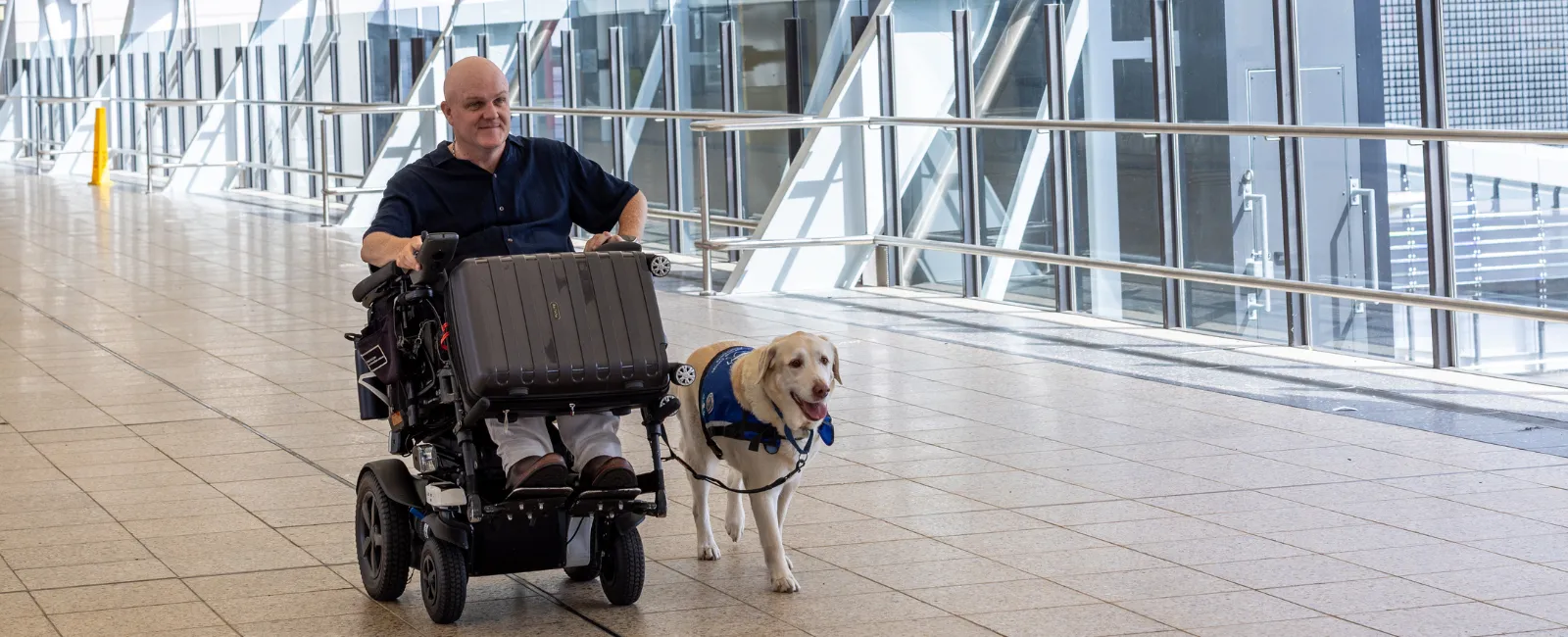
When it comes to travelling with a disability, Tim McCallum has more experience than most. With over 500 flights under his belt, the Ambassador of Assistance Dogs Australia is no stranger to navigating airports alongside his assistance dog, Casper.
Tim, who is a C4 quadriplegic with a spinal cord injury, shares his tips on travelling independently, and why preparation makes all the difference.
“It’s okay to be nervous,” says Tim when asked what he would say to someone with a disability flying for the first time. “But take confidence in knowing that thousands of people with disabilities travel every day. Many people have forged a path before you.”
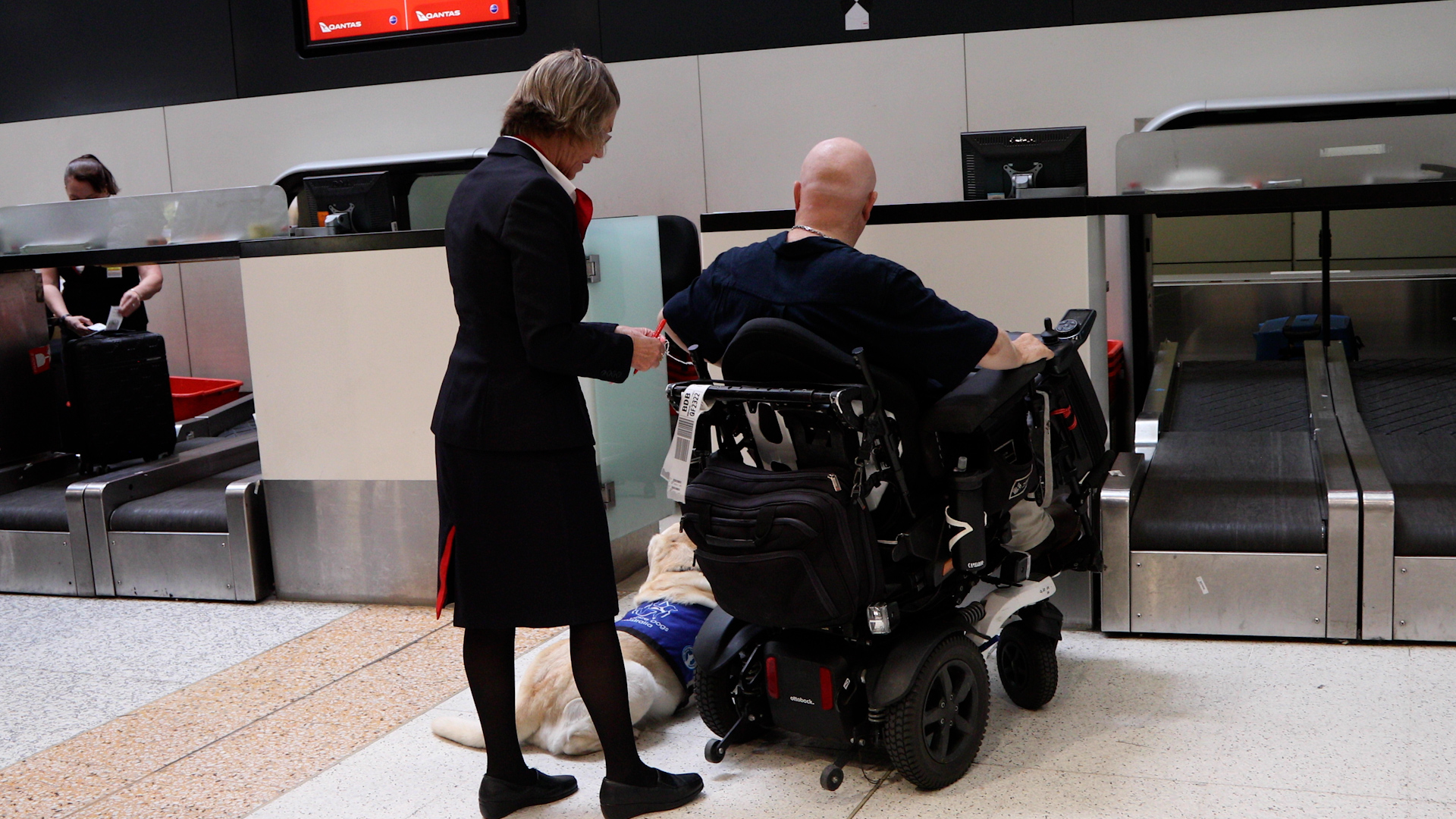
Preparation, he explains, is the key to easing those nerves.
“Preparation isn’t just helpful, it’s essential. I have an extensive checklist, and that’s my comfort,” he said.
“From what I need to pack to who I need to contact at both ends of the journey, I go through the whole process every time I fly.”
While it might seem like a lot at first, he reassures travellers that the effort pays off.
“It looks daunting, but it’s not. Once everything is organised and communication is clear, it becomes smooth running.”
Preparation can begin well before you’ve even booked the flight. Through his role at Spinal Cord Injuries Australia, Tim also runs a Travel With Confidence program, where participants are guided through every step of the journey well ahead of their travel date.
“We guide them through from start to finish. We do trial runs so nothing feels unfamiliar. We start at check-in, work our way through security, and head right up to the gates.”
One of the biggest unknowns for travellers with disabilities is what happens beyond security, particularly when travelling with mobility aids.
"A common question I get is: how do I actually get on the plane?” Tim says. “People understand check-in and security, but then wonder: what happens to my chair? Will it be handled correctly? Will I get it back straight away?"
While these concerns are often shaped by worst-case stories, Tim’s own experience tells a different story.
“I’m 500 flights in, and I’ve only had to submit three repair requests in my lifetime,” he says.
A big part of that success comes down to communication.
“I prepare my device for travel and attach instructions, including how to handle it, where the brakes are and how the backrest works. Every mobility device is different, and you can’t assume baggage handlers will know. It’s your responsibility to provide the information that makes the process as seamless as possible.”
Over time, understanding how airports and airlines operate has helped Tim become a more confident traveller.
“It’s about knowing why certain things are required,” he explains. “Why do I need to declare what batteries are in my chair? Why do I need to be at the gate earlier? Why do they need details about my assistance dog’s weight and dimensions?”
Once those processes make sense, the experience becomes far less intimidating.
“It’s okay to ask why. And once you understand it, it’s much easier to trust the process.”

For Tim, travel is about far more than getting from one place to another, it’s a vital part of maintaining independence.
“It allows us to remain the people we want to be,” he says. “We all have dreams and goals, and travel is part of that. Whether it’s seeing family, going on holiday, or travelling for work — we need to be able to get from point A to point B.”
Accessible travel, he says, plays a crucial role in making that possible.

Tim’s advice for anyone considering their next trip?
“Hurry up and do it. The big world is out there, and there’s no reason why you can’t go and see it.”
Tim also hopes fellow passengers can better understand the experience of travellers with disabilities.
"Patience is a big one,” he says. “Sometimes it might look like we’re skipping the queue in the assistance line, or boarding first — but it’s not an entitlement, it’s a procedure."
Those processes exist to ensure safety and accessibility, often requiring additional time.
And when it comes to assistance animals like Casper, the rules are simple.
“Give them space and please don’t interact as they’ve got an important job to do,” Tim says.
“A bit of patience, understanding and respect goes a long way.”
Airports also provide facilities to support travelling assistance dogs, including designated toilet and watering areas, helping ensure they remain comfortable and ready to work throughout the journey.