
Changed
Changed
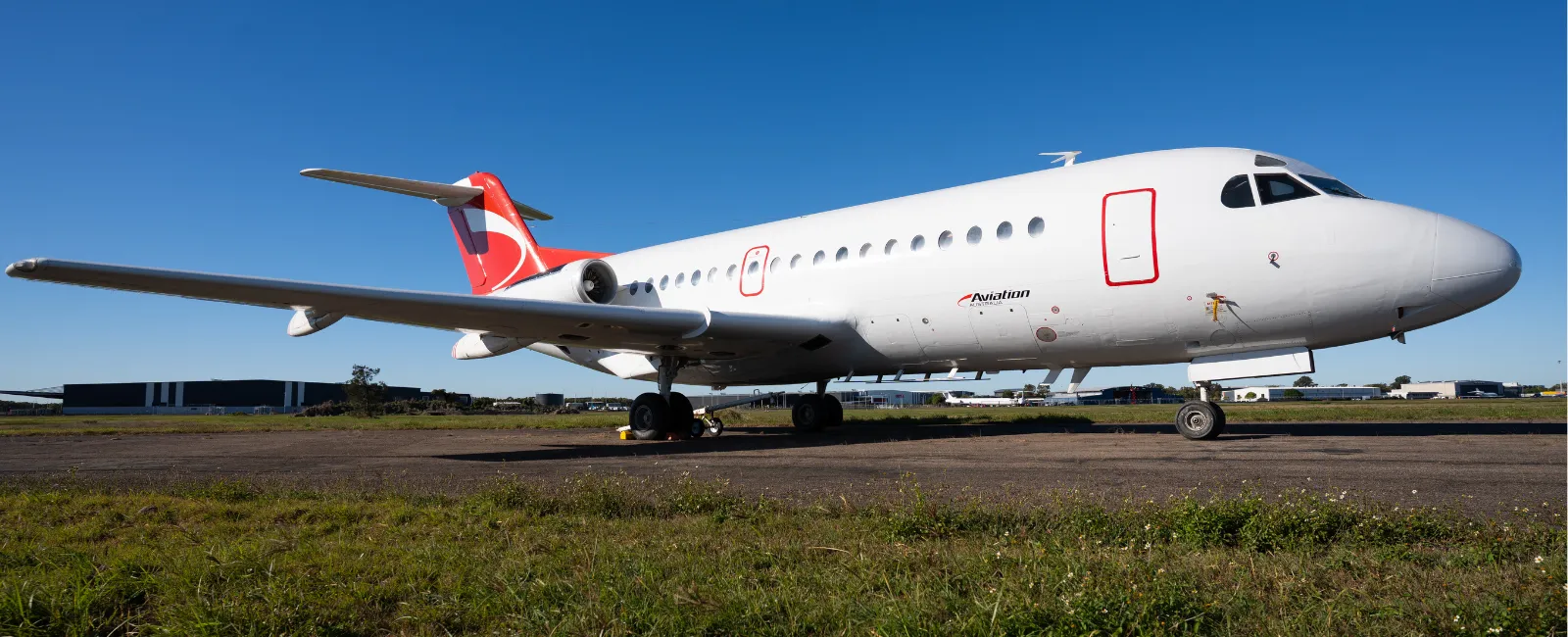
The tail section of the retired Fokker F28 Fellowship on display at Brisbane Airport has lived many lives – from commercial passenger flights, to training thousands of future aviation engineers at Aviation Australia, and now as part of Brisbane’s newest plane spotting destination.
The story of this aircraft also forms part of a much bigger connection between Brisbane Airport and Fokker aircraft – one that stretches back almost 100 years.
Long before Brisbane Airport became one of Australia’s busiest aviation hubs, a Dutch-built aircraft touched down on a grassy field at Eagle Farm Aerodrome and changed aviation history forever.
In June 1928, the Southern Cross completed the world’s first trans-Pacific flight, travelling from the United States to Australia. After a 21-hour and 21-minute journey from Oakland, California, with stopovers in Hawaii and Fiji, it arrived in Brisbane to a crowd of more than 25,000 people in Brisbane.
The aircraft itself was a Fokker F.VIIb/3m, built in the Netherlands by Dutch aviation manufacturer Fokker.
Nearly 100 years later, Brisbane Airport still has one of the strongest connections to Fokker aircraft anywhere in the world.
From the preserved Southern Cross memorial near the International Terminal, to Alliance Airlines operating the world’s largest fleet of Fokker aircraft from Brisbane Airport today, the city’s connection to the iconic planes has never really disappeared.
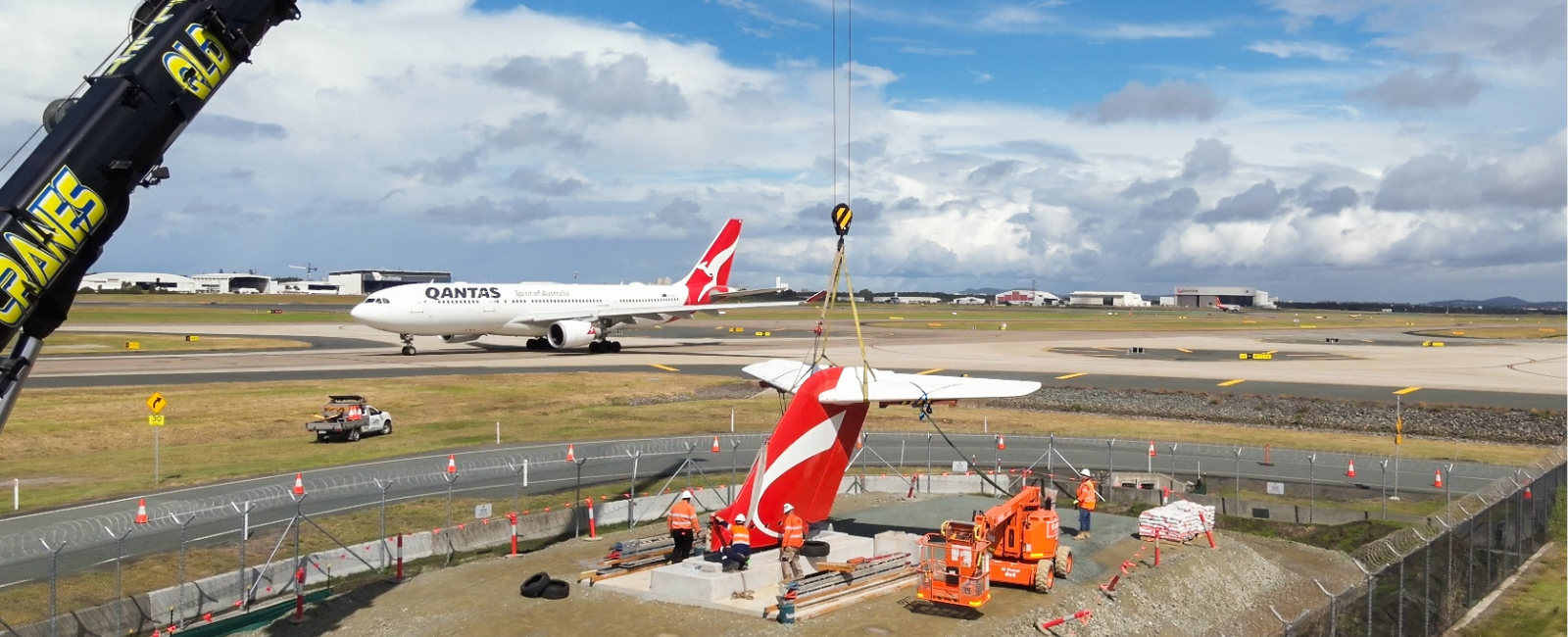
Now, that story continues with Fellowship Place, Brisbane Airport’s dedicated plane spotting area, featuring the tail of a retired Fokker F28 Fellowship aircraft donated by Aviation Australia.
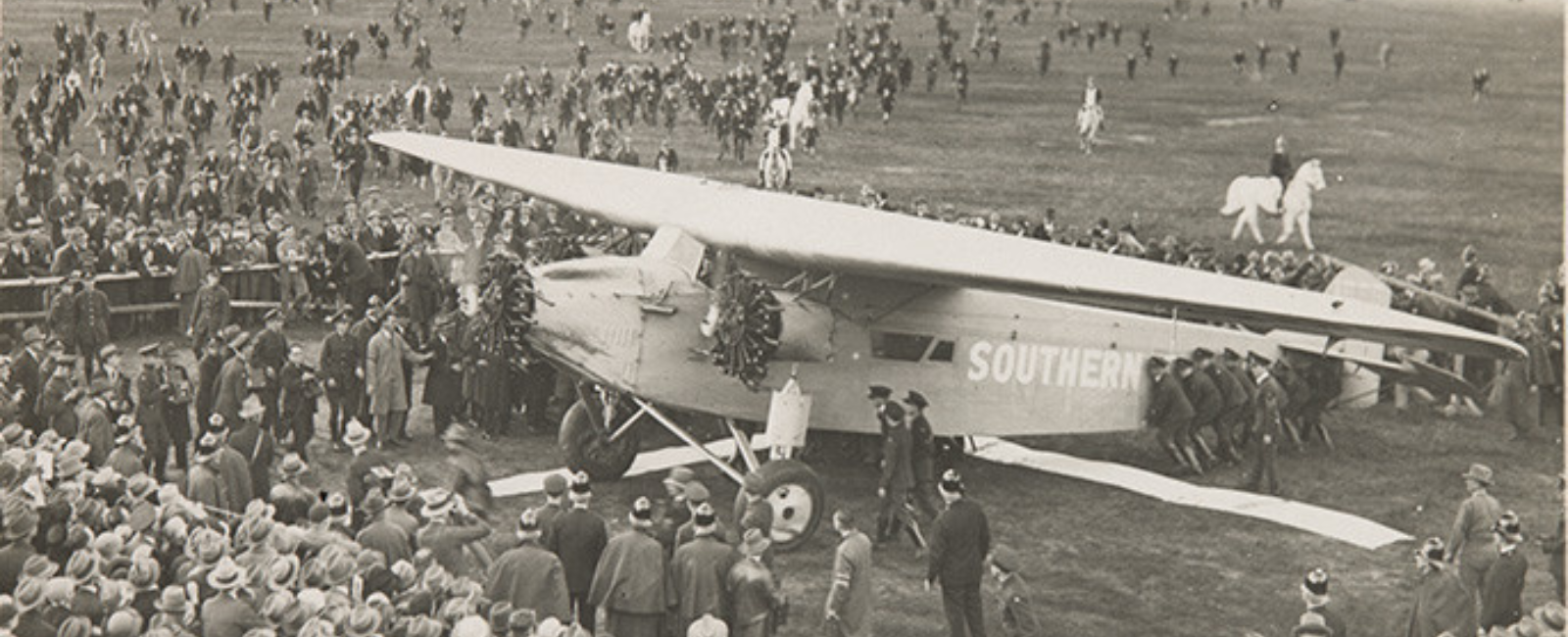
When the Southern Cross landed in Brisbane in June 1928, thousands of people gathered to witness what was considered one of the greatest aviation achievements of the era.
Charles Kingsford Smith (pilot) and his three-man crew Charles Ulm (co-pilot), Captain Harry Lyon (Navigator) and James Warner (Radio operator) journeyed from Oakland, California to Brisbane, proving long-distance international air travel was possible.
“We stepped from the cockpit into a surging press of people, who all seemed to want to shake hands with us at the same moment. A lady broke through the crowd and decorated Kingsford Smith with a garland of roses. Then we were swept off our feet, and carried shoulder high to a motor car before the Qantas hangar,” Ulm and Kingsford Smith recalled.
While Kingsford Smith often takes centre stage in Australian aviation history, the aircraft itself also played an important role. Built by Dutch manufacturer, Fokker, the tri-motor Fokker was known for its reliability and long-range capability at a time when aviation was still in its infancy.
Today, the Southern Cross remains preserved at the Kingsford Smith Memorial near Brisbane Airport’s International Terminal, standing as a reminder of the city’s role in one of aviation’s defining moments.
The Southern Cross may have introduced Fokker aircraft to Australian aviation history, but it was only the beginning of the company’s long relationship with the country’s skies.
In the decades that followed, Fokker aircraft became a familiar sight across Australia, particularly on regional routes connecting communities across vast distances.
Introduced in the late 1950s, the Fokker F27 Friendship helped reshape regional air travel with its reliability and ability to service smaller airports. Operated by airlines including Ansett and Trans-Australia Airlines (TAA), the aircraft became an important link between regional towns and major cities during a period of rapid aviation growth.
By the 1980s and 1990s, newer aircraft including the Fokker 70 and Fokker 100 continued that legacy, offering efficient jet services for short and medium-haul routes across Australia.
While many airports around the world now only display Fokkers in museums, Brisbane remains one of the few places where they are still part of daily operations.
Alliance Airlines, headquartered at Brisbane Airport, operates the world’s largest fleet of F70 and F100 aircraft. For plane spotters and aviation enthusiasts, that makes Brisbane one of the best places in the world to continue seeing these aircraft in action.
Their distinctive shape, rear-mounted engines and colourful liveries have become a familiar sight across Brisbane’s runways.
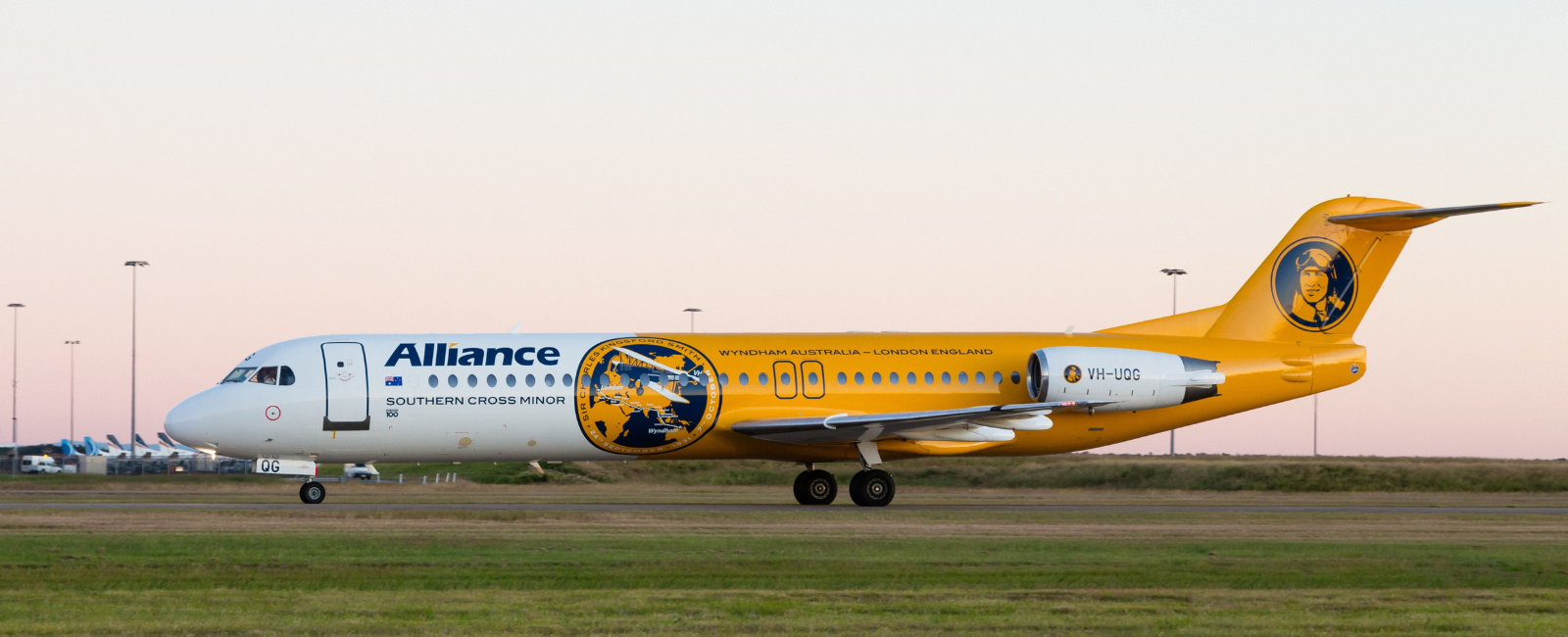
Keen-eyed plane spotters may even spot Alliance Airlines’ commemorative F100 VH-UQG livery, created in honour of Sir Charles Kingsford Smith – another subtle nod to Brisbane’s enduring Fokker connection.
Construction of Fellowship Place, Brisbane Airport’s public plane spotting area, was announced during Brisbane Airport’s 100 year celebrations in 2025.
“It’s our birthday, but the present is for Brisbane. We wanted to create something that celebrates our past and inspires the future, and this iconic plane spotting area will be the place to visit,” Brisbane Airport CEO Gert-Jan de Graaff said.
“We have growing demand from people who want to come and have a front-seat view of aviation, and we know the children watching aircraft today will be the pilots and aircrew of tomorrow."
Positioned closer to the taxiways than the previous position, it provides less obstructed views of aircraft landing and taking off on the eastern runway, as well as aircraft taxiing to and from the western runway.
At the centre of the space is the tail of a retired 50-year-old Fokker F28 Fellowship aircraft, donated by Aviation Australia.
During its time at Aviation Australia, the aircraft helped train thousands of students across mechanical engineering, avionics and aircraft structures, preparing future engineers and aviation professionals for careers across the industry. Students from Australia and around the world learned hands-on skills around the aircraft, using it to troubleshoot faults and experience real-world maintenance scenarios.
Introduced in the 1960s, the F28 Fellowship was designed as a short-haul regional jet capable of operating from smaller runways while still delivering the speed and performance of jet travel. Across Queensland and regional Australia, aircraft like the F28 helped connect communities and made air travel faster and more accessible during a transformative period for Australian aviation.
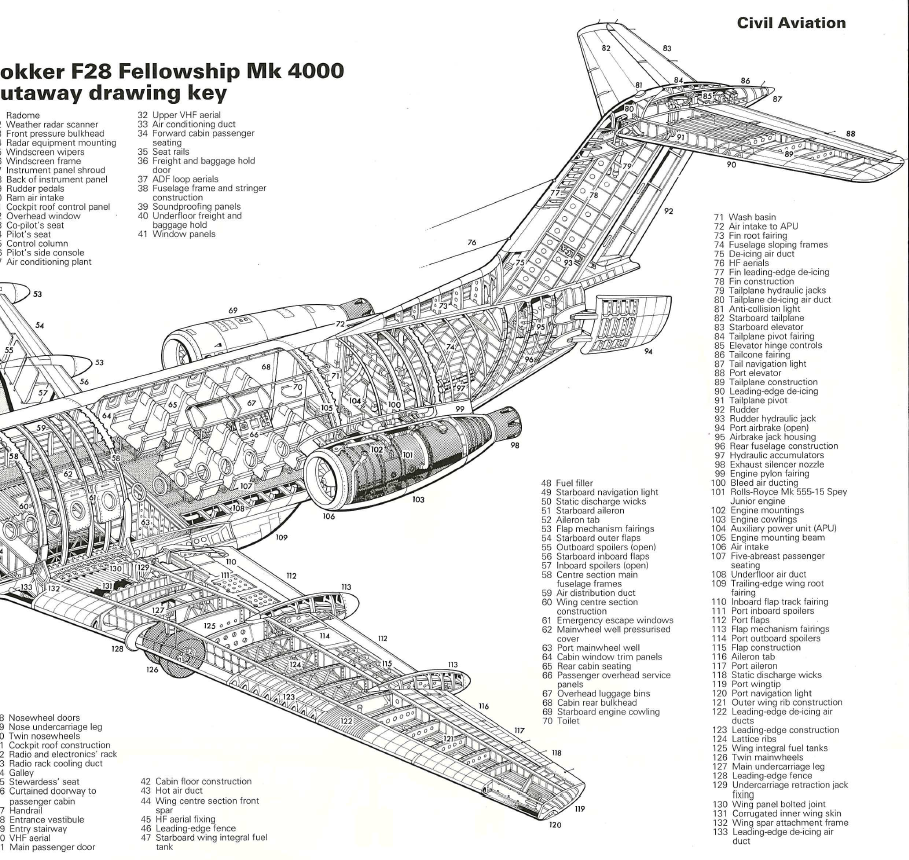
Its new home at Fellowship Place gives the aircraft a second life – this time as part of Brisbane Airport’s public aviation story.
“It’s always sad to see an aeroplane stop doing what it’s designed to do – flying,” says David Kingshott, Qantas Group Engineering Academy Technical Lead and Practical Training Manager for Aviation Australia.
“But to then use it in a different way, to train the next generation of engineers, is another lease of life for that airframe.”
For David and the Aviation Australia team, Fellowship Place also created an opportunity to preserve part of the aircraft’s legacy.
“It was an ideal situation that we could save parts of the airframe and keep a bit of the history of that aircraft around,” he says.
“It’s also the last F28 in Australia, so being able to preserve part of it for the plane spotting area is pretty special.”
Even the name Fellowship Place carries meaning. The F28 Fellowship followed the earlier F27 Friendship, with both aircraft names reflecting connection, community and shared journeys — values that reflect the spirit of the aviation community.
Fellowship Place was created to embrace that community and provide a dedicated space where visitors can safely experience the energy of Brisbane Airport up close.
And there’s plenty to see.
From modern international aircraft and Alliance Airlines’ iconic Fokker fleet, to the constant rhythm of arrivals and departures, the precinct offers a unique perspective on one of Australia’s busiest airports.
For David, Fellowship Place is also about inspiring future generations of aviation professionals.
“The amount of kids you see getting up at five in the morning to watch aircraft land and take photos is pretty impressive,” he says.
“Hopefully this sparks that interest in aviation and all the different parts of the industry people can work in and be a part of.”
Want to dive deeper into the history of the F28 Fellowship tail? Brisbane aviation historian Ron Cuskelly has compiled an extensive history and photo archive through his website Squawk Ident.