
Changed
Changed
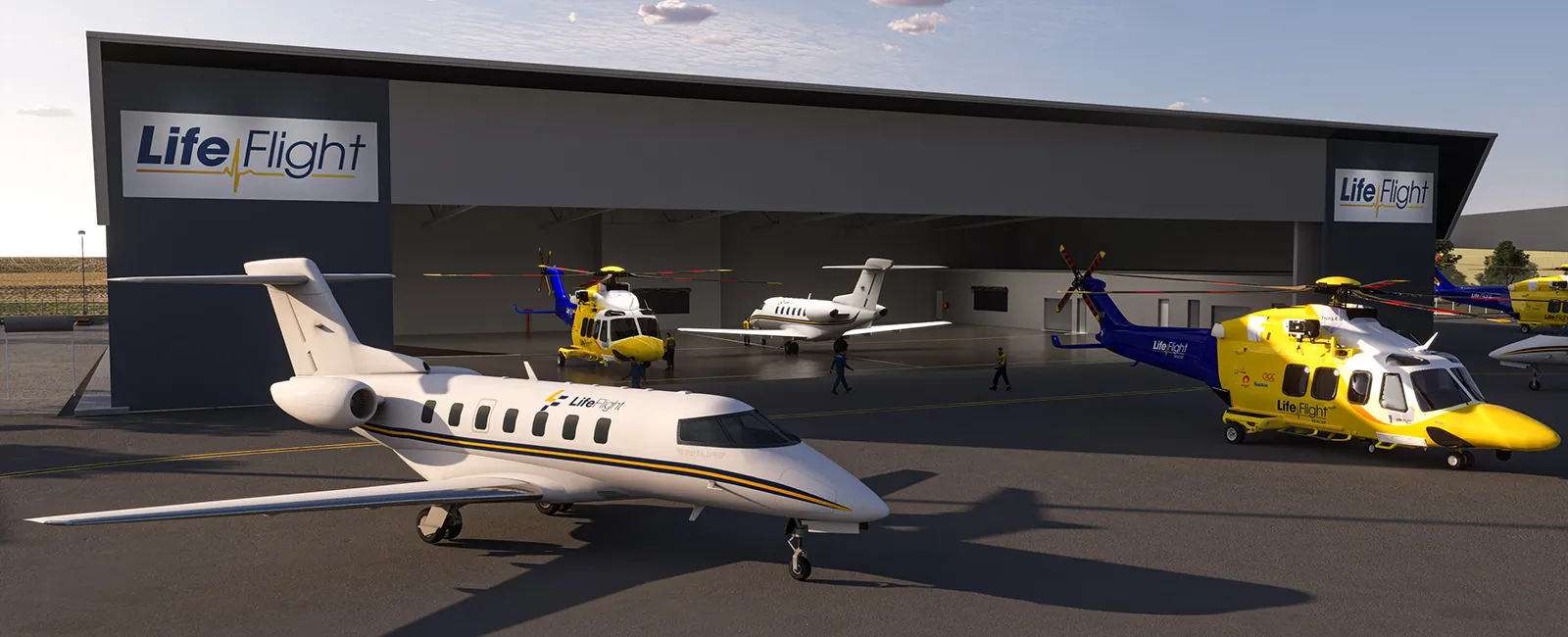
Every second counts when it comes to connecting patients with critical care. With demand growing, Brisbane Airport is preparing to meet that need with a state-of-the-art Aeromedical Precinct, designed to bring Queensland’s leading rescue and medical services together in one purpose-built hub.
This $217 million project – currently under construction between the airport’s two runways – offers capacity for 26 aircraft and includes 18,700 square meters of hangar and headquarters space, along with 17,800 square meters of tarmac parking. It’s a vital connection for Queensland’s regional, rural and remote communities that will enhance emergency response capabilities across the State.
For LifeFlight pilot Alex Dorr, who’s been based at Brisbane Airport since LifeFlight launched a base in Brisbane almost a decade ago, the new precinct signals an exciting turning point.
“Last year our Brisbane-based jets and helicopters helped more than 1,000 people – and that number’s only growing,” Alex said. “This new hub will future proof our operations. It’s not just about more hangar space; it’s about being ready for what the future demands.”
LifeFlight’s fleet, which includes the Challenger 604 aircraft, the longest-range aeromedical jet and AW139 helicopters to support search and rescue operations, operates 24/7. Whether it’s responding to a snake bite, a serious workplace accident in the outback, or flying a critically ill patient home from overseas, timing and location are everything.
“Our service is 24 hours a day, seven days a week and the crews are flying at all hours of the night. Brisbane Airport being 24/7 allows us to operate around the clock,” Alex said. “Plus, having all the major hospitals just a few kilometres away is a huge advantage - this is exactly where you want this kind of infrastructure.”
The new Aeromedical Precinct will also include a dedicated patient transfer facility – a major improvement for how patients are cared for in transit.
“Having a dedicated transfer space means we can ease pressure on hospital transfers and give patients a comfortable, clinical space to wait before or after their flight – which is better for them, and better for our response times.”
For Louise Burton, a flight nurse with the Royal Flying Doctor Service (RFDS) based at Brisbane Airport, those moments of care can make all the difference.
“We often spend time with someone on one of the worst days of their life,” Louise said. “Whether they’ve just had a new diagnosis or been in a serious accident, we help them get to where they need to be for treatment – and sometimes just being there, reassuring them, is part of the job.”
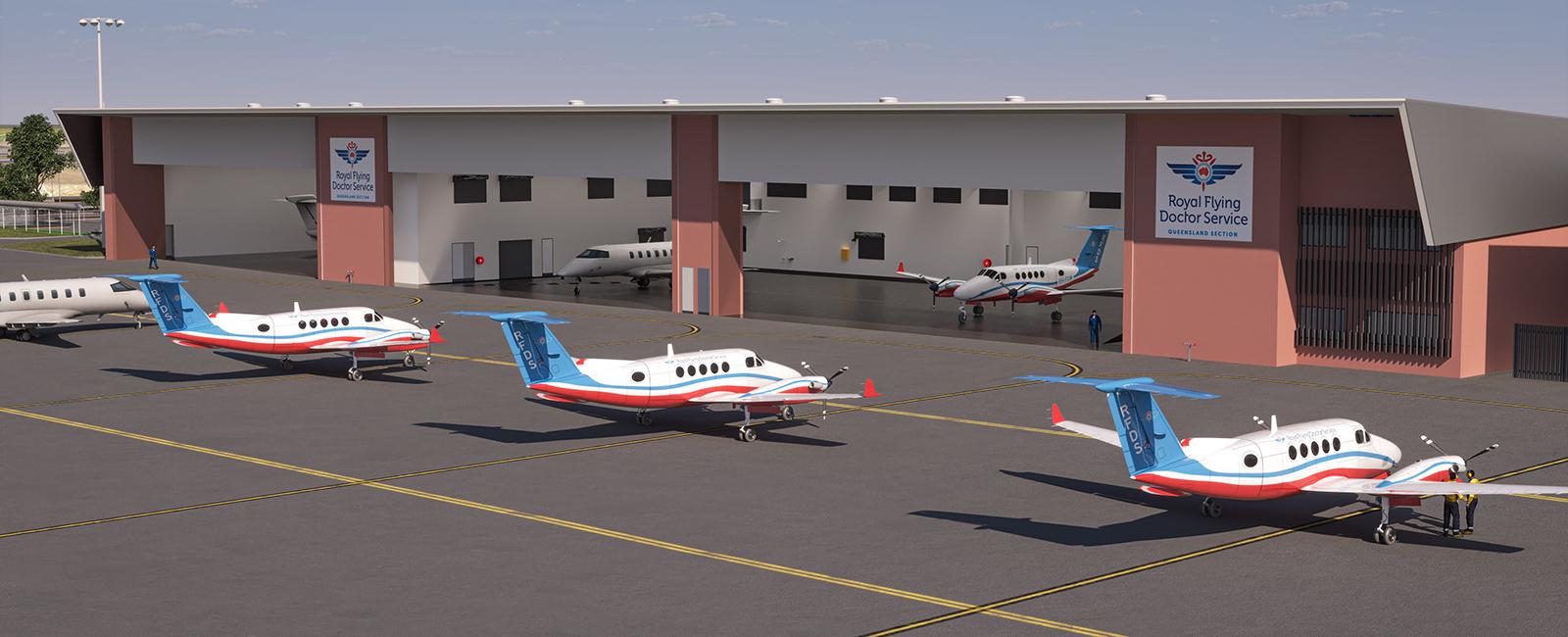
Last year, RFDS transferred approximately 7,207 patients through Brisbane Airport. With 26 aircraft operating from eight aeromedical bases across Queensland, the service reaches as far north as the Torres Strait Islands, as far west as Birdsville – and sometimes even crosses into Northern New South Wales.
“Patients are so extraordinarily grateful when we arrive. Some are surprised we’d get out of bed in the middle of the night to come get them – but that’s what we do, 24/7,” Louise said.
With Brisbane’s major hospitals close to the runway and the airport’s round-the-clock operations, Louise said the new precinct will enhance the way all aeromedical teams work together.
“Having Royal Flying Doctor Services, LifeFlight and Queensland Health Retrieval Services all based in one central hub – sharing the same facility – will streamline everything” she said.
Behind the scenes, connecting all of these services is Retrieval Services Queensland (RSQ). As Clinical Director, Dr Ellie Kitcatt coordinates emergency responses from across the state, including remote hospitals, ambulances and search and rescue operations.
“Our job is to get the right team to the right patient, fast,” Ellie said. “Whether it's a baby being born in a rural town without birthing facilities, or a hiker injured deep in the bush, we send the care where it’s needed and bring people back to specialist services.”
In the last year alone, RSQ handled more than 27,000 referrals for retrievals, responding to everything from natural disasters to complex medical emergencies. That growing demand is exactly why the Aeromedical Precinct is needed.
“This new hub will allow us to work more closely with all the providers – LifeFlight, RFDS, Queensland Government Air (QGAir) – all in one place. That proximity will improve how we plan, respond, and care for patients,” Ellie said.
The hub will also house RSQ’s coordination centre and expanded telehealth services, facilitating remote support to rural and remote clinicians and patients, via RSQ emergency clinicians, nurse practitioners and midwives.
And while it’s a technical and logistical marvel, Ellie says at its heart, the Aeromedical Precinct is about people.
“We get to be there when someone needs help most. We bring them care, sometimes thousands of kilometres away from home – and then help get them back to their families again,” she said. “This hub means we can keep doing that, better and faster, for years to come.”
As Brisbane Airport continues its $5 billion Future BNE transformation, projects like the Aeromedical Precinct are shaping more than just the future of travel – they’re helping shape the future of healthcare in Queensland.