Changed
Changed

For many Queenslanders, access to healthcare is as simple as booking an appointment, driving to a local clinic or heading to the nearest hospital.
But for those living in regional, rural and remote parts of the state, getting the care they need can mean travelling hundreds of kilometres. That’s where the Royal Flying Doctor Service (RFDS) comes in.
For more than 98 years, the RFDS has been helping connect Australians with essential healthcare.
In Queensland, its work extends far beyond the aircraft that fly across the state each day and Brisbane Airport has been proud to support that work as an RFDS partner since 2009, contributing over $4.3 million to help connect Queenslanders with vital healthcare.
From emergency aeromedical retrievals to primary health care, dental, mental health and telehealth services, the RFDS Queensland helps bring care to communities, wherever they are.
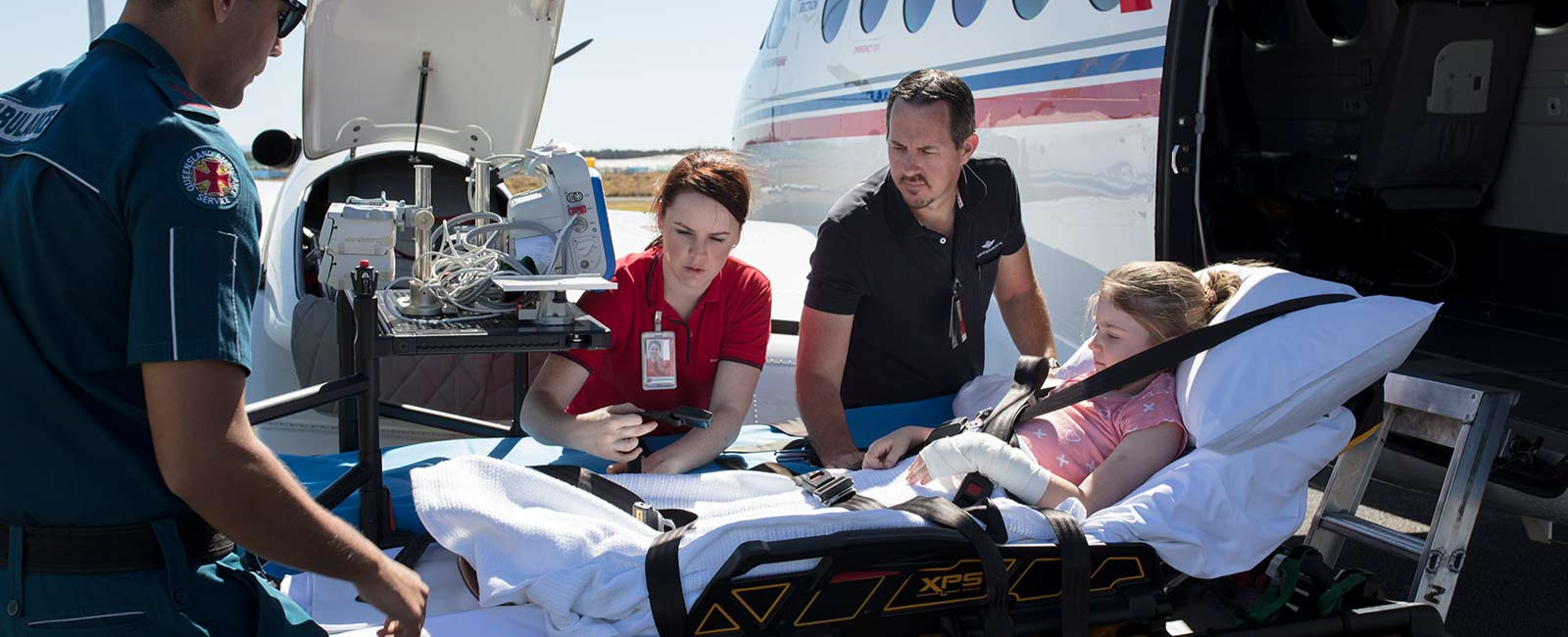
With Queensland communities spread across more than 1.7 million km², distance can create significant challenges when it comes to accessing healthcare.
During the 2025/26 financial year, the RFDS (Queensland Section) delivered more than 81,000 occasions of care across the state. That's an average of 223 every day.
Its team delivered aeromedical services, primary health care, dental, mental health and telehealth services to people across Queensland.
In Queensland, 26 aircraft covered extraordinary distances to connect patients with the care they needed. During 2025/26, RFDS pilots flew 25,047 hours across 8,963,261kms and made 23,548 landings. The fleet transported 13,949 patients across Queensland.
Those numbers tell an impressive story, but behind every flight, landing and consultation is a person who needs care – like Glenn Landsberg who’s light aircraft crashed on a property one hour south west of Quilpie.
For many people, the image of the RFDS is an aircraft landing on a remote airstrip to retrieve a critically ill or injured patient.
Aeromedical care remains a vital part of the RFDS, but it is only one part of its work. The service also helps people access healthcare before an emergency happens.
During 2025/26, the RFDS (Queensland Section) completed 4,716 fly-in fly-out clinics across around 30 locations.
More than 22,000 primary health care consultations were delivered in communities ranging from Eulo in Queensland's south west to Dajarra in central Queensland and Lockhart River in the far north.
For communities with limited access to local healthcare services, these clinics can make it easier to see a GP, nurse or health professional without travelling long distances.
The RFDS is also committed to improving access to dental care through its RFDS Dental Service – a fully equipped Mobile Dental Unit on wheels, as well as mental health and telehealth services.
These services are delivered by a dedicated team of pilots, like RFDS Pilot Dave Collins, medical professionals and support staff, all working together to keep communities safe and improve their health and wellbeing.
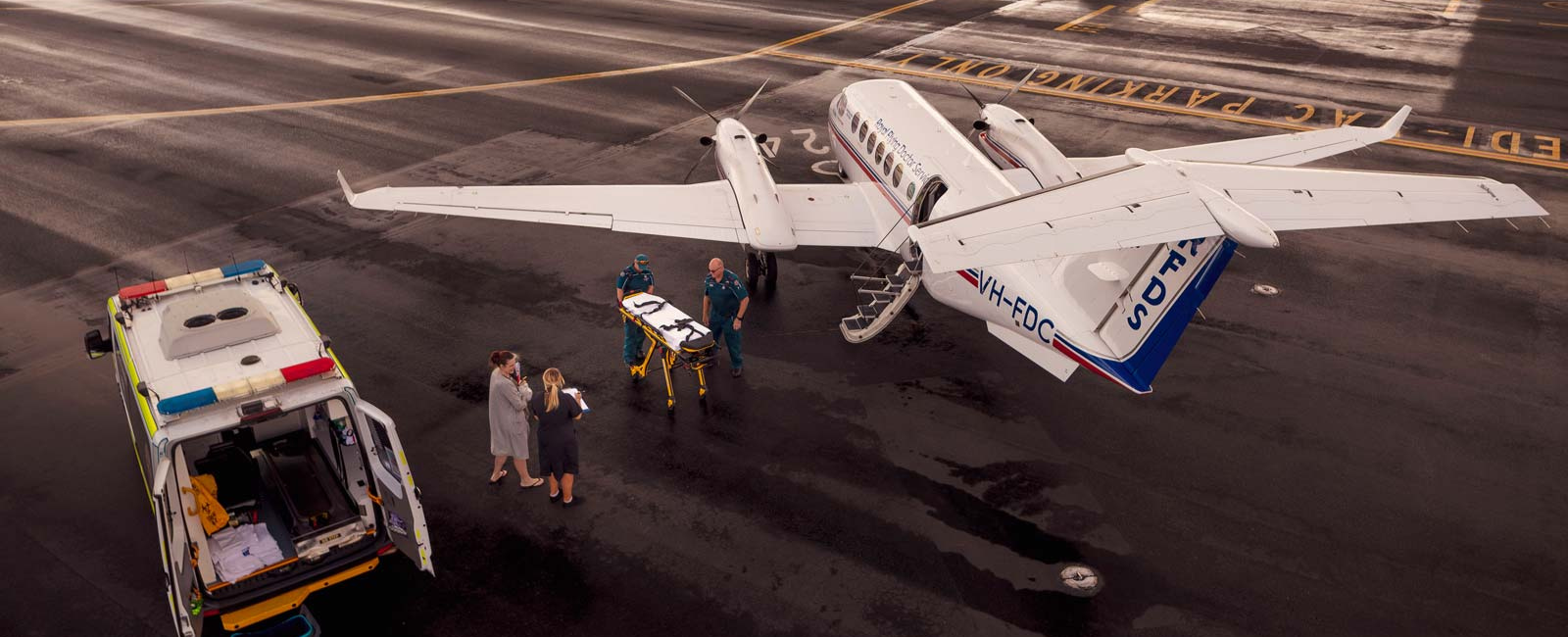
Each year, on average, more than 3,500 landings from across Queensland transfer patients through Brisbane Airport for specialist treatment and care.
For patients travelling from regional, rural and remote communities, Brisbane can be the link between their local community and world-class hospitals and medical specialists.
Brisbane Airport is proud to partner with RFDS (Queensland Section) in its life-saving work, specifically contributing towards the aeromedical fit-out of aircraft and helping purchase medical equipment.
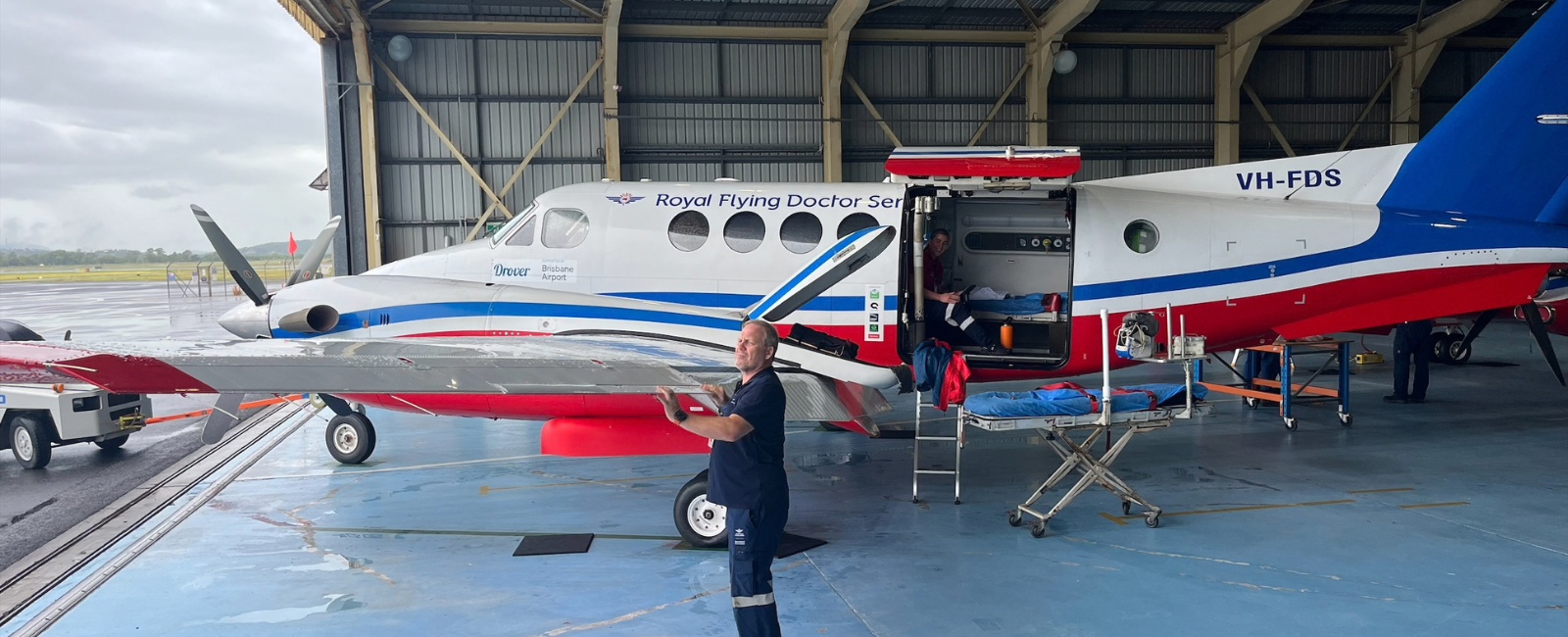
In 2024, Brisbane Airport and the RFDS celebrated 15 years of partnership by inviting the public to name an RFDS aircraft.
The winning name was Drover, recognising the first purpose-built RFDS aeromedical aircraft from the late 1940s. The name was nominated by 92 year old Max, who’s connection to RFDS started with life-saving rescue.
Max, a young stockman has suffered a burst appendix and was retrieved from a wet weather airstrip in the Gulf, on the Mitchell River. After three attempted landings, a doctor who informed Max he had mere hours to live, and a successful surgery, he lived to tell the tale thanks to the RFDS.
To date, Drover has flown 892 patients to safety (a number that continues to climb) and plane enthusiasts can track Drover’s flight paths while out on mission.
Today, specialist aircraft like the King Air B200 Drover continues the tradition, transferring critically ill patients to Brisbane's world-class hospitals and specialist care.
As Queensland grows, so does the need for fast, coordinated access to healthcare.
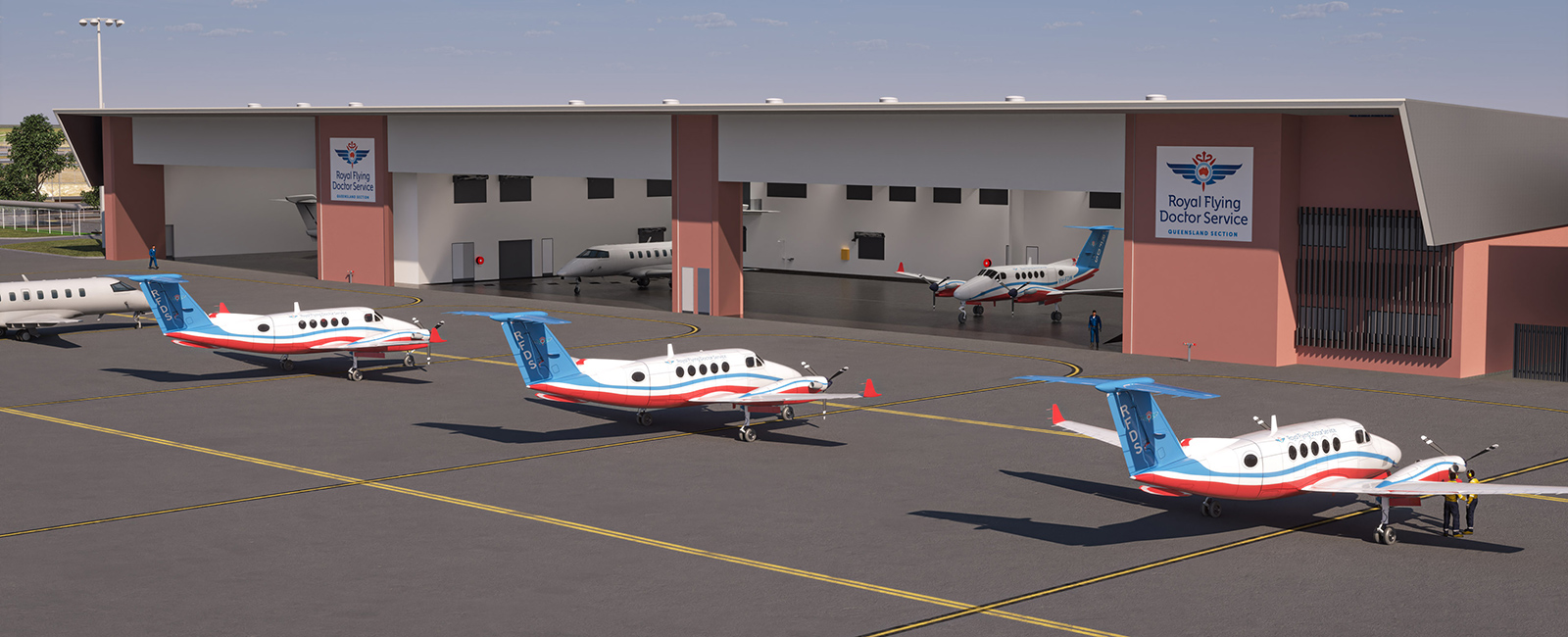
Construction has commenced on Brisbane Airport's new Aeromedical Precinct as part of Future BNE, which will bring together key emergency and aeromedical services in one purpose-built location.
The 18,700m² facility will be located in the Airport North Precinct between Brisbane Airport's two runways.
It will provide a home for the RFDS, LifeFlight and Queensland Health's Retrieval Services Queensland, alongside facilities for the Queensland Police Service Aviation Capability Group.
The precinct will include new patient transfer facilities, state-of-the-art hangars for fixed and rotary wing aircraft and administration areas.
Aeromedical Precinct features:
· Capacity for 26 aircraft and 17,800m² of tarmac parking.
· Patient transfer facilities to move patients between aircraft and ambulances.
· 18,700m² of hangar and administration space, equivalent to the size of King George Square.
· Medical base for regional patient and donor transfers.
· Parking for 450 staff and an onsite cafe.
· Targeting 5 Star Green Star accreditation and includes a 400kW solar system.
· Access to 24/7 operations at Brisbane Airport
By bringing these services together, the precinct will help strengthen Queensland's aeromedical capabilities and connect more regional, rural and remote Queenslanders with major hospitals, life-saving medical care and emergency services.
The work of the RFDS is made possible by its dedicated staff, along with support from communities across Australia.
There are a number of ways to get involved, including making a donation or taking part in fundraising events such as Oceans to Outback, held in October annually.
Every contribution helps the Royal Flying Doctor Service continue delivering healthcare to Queenslanders, no matter where they live.